The Co-Traveler
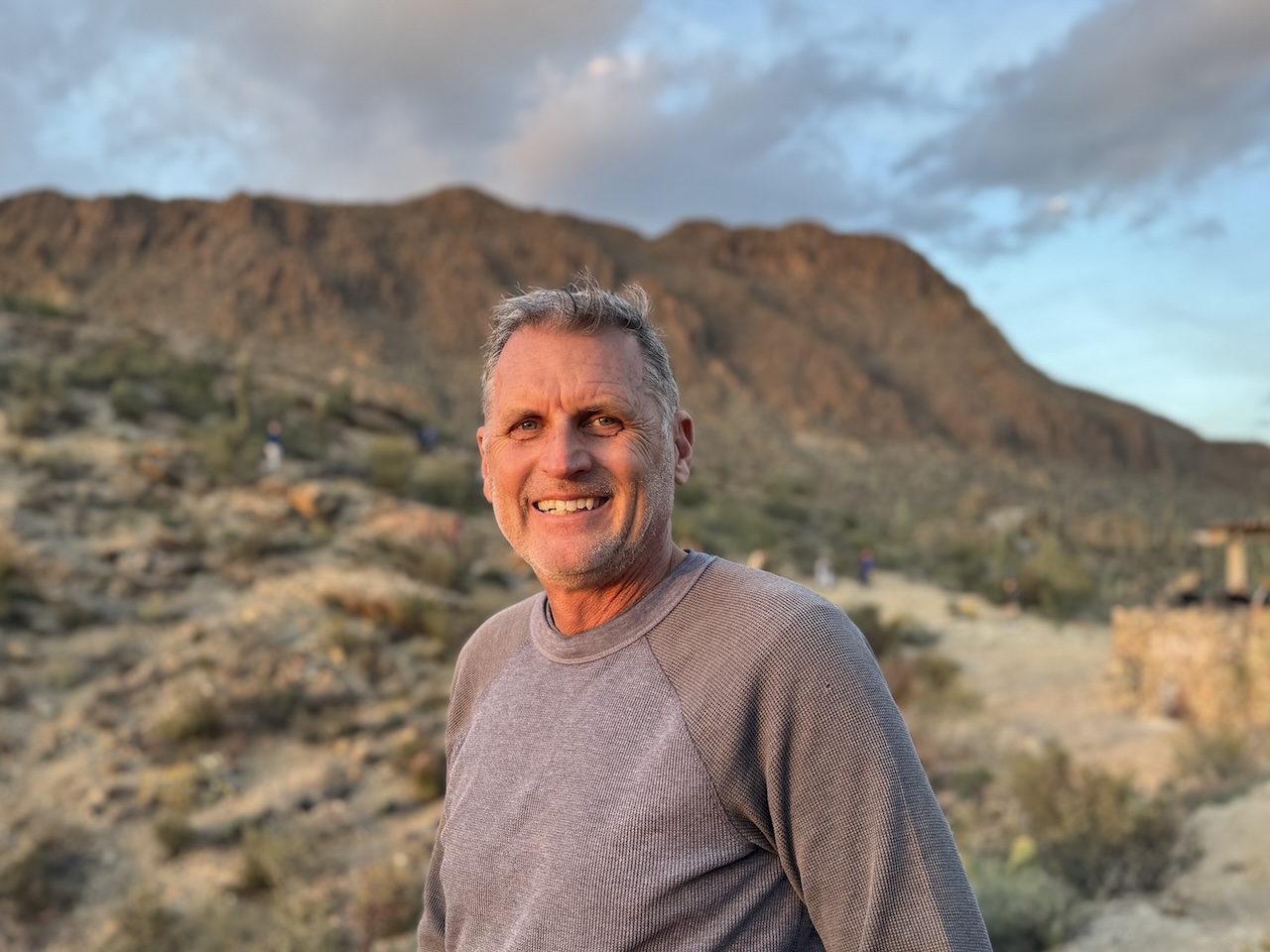
"I am not sitting across from you as an expert with all the answers. I am walking beside you as a guide on the couragepath."

The Journey Here
If you are reading this, you have likely already achieved much of what the world calls success. But if you are feeling the weight of the performance, the exhaustion of the shadowlands, or the quiet ache of a fragmented narrative, I want you to know that there is a deeper story waiting for you.
I have been a licensed counselor in private practice for over twenty years, long enough to know that the work is never finished, and that integration is always a journey rather than a destination.
Before I became a counselor, I spent over two decades as a pastor, walking alongside people in their most profound moments of grief, transition, and searching. I hold a Master of Divinity from seminary, where I was later invited to serve as a professor, educating future counselors on the integration of faith, psychology, and the ancient healing arts. I hold a Master of Arts in Counseling Psychology and am licensed in California as a Marriage and Family Therapist.
I have been a student of the deeper story for most of my adult life, not only in the counseling room, but on the road, the trail, and the track.
For many years, I have trained and competed as an endurance athlete. Long before I understood the neuroscience of narrative fragmentation, I understood something about it experientially, from the interior landscape of a long run, from the particular kind of self-knowledge that only sustained physical effort can produce. Endurance athletics, at its best, is not about performance. It is about revelation. The miles strip away the managed self and leave behind something more essential: the person you actually are when there is nothing left to perform.
I came to understand that this is precisely what Life Telling Processing asks of the people I work with. Not a performance of healing. A revelation of the self that has been there all along, beneath the survival strategies and the carefully maintained image.
I have sat with surgeons who run ultramarathons, executives who competed in college, and professional athletes facing the threshold of transition. In each of them, I have found that the questions the miles asked are the same questions that brought them to the counseling room. This understanding has shaped my work with athletes and high-performing professionals, where the track and the counseling room are, in the deepest sense, asking the same things: What has the journey revealed? What has it wounded? And what has it forged?
Away from my practice, I coach cross country and track and field at a local high school, walking alongside young athletes through the particular crucible of competitive endurance sport. I have learned things in that role that twenty years of clinical training alone could not have taught me: about the relationship between physical courage and psychological courage, about what it means to accompany someone through sustained discomfort toward a finish line they are not sure they can reach, and about the way the inner story a young person carries about themselves either expands or contracts under the pressure of competition.
My wife and I have been married for 36 years, a relationship that has been its own couragepath, with its own seasons of fragmentation and integration. We live on a small retreat property in Fair Oaks, at the base of the Sierra Nevada, where the rhythm of the land, unhurried and patient and shaped by forces far older than any of us, has formed the contemplative quality of presence that this work requires.
All of this, the clinical training, the miles, the coaching, the marriage, the land, converges in the counseling room. Not as a collection of credentials, but as a life that has been lived with the same questions I hold with every person I work with. Who am I beneath the performance? What has the journey revealed? And what does the mosaic of this particular life, gathered and held with honesty and care, have to say about who I am becoming?
I tell you this not because my story is the point, but because I believe the person who sits with your story matters. Who they have been, what they have lived, and what the journey has asked of them.
Life Telling Processing: A Modality I Developed
Life Telling Processing (LTP) is not a borrowed framework. It is a modality I developed over years of clinical practice, pastoral care, and personal study, drawing on the neuroscience of narrative integration, the depth psychology of archetypal patterns, and the contemplative wisdom of the Christian tradition.
LTP is grounded in a simple but profound conviction: that our stories are not just psychological events. They are neurological ones. The way we tell our stories, or fail to tell them, shapes the very architecture of our brains. When trauma, chronic stress, or the slow accumulation of archetypal injuries fragments the narrative, healing requires more than symptom management. It requires integration.
Through LTP, I work with clients to gently gather the fragmented pieces of their story, identify the archetypal injuries driving their survival programs, and arrange those pieces into a mosaic: a life that is not just successful, but whole.
The Season That Changed Everything
In late 2012, my life felt like it was humming along. I was teaching, seeing clients, and in the process of returning to academia to pursue a PhD. I had narrowed my search to several programs in the San Francisco Bay Area. The path forward felt clear and full of momentum.
Then, in 2013, I was in an automobile accident.
It was not the kind of accident that announces itself as catastrophic. There was no high-speed collision, no dramatic injuries visible to the outside world. But what happened inside was something I had no framework to understand. I suffered what is called a rotational brain injury, caused not by direct impact but by the rapid spinning of the head, which generates cortical tearing. The connections between brain regions that normally weave experience into a coherent story were disrupted. What followed was a prolonged season of fragmentation unlike anything I had encountered in twenty years of walking alongside others through theirs.
I lost the thread of my own story.
What I could not have known then was that this experience would become the ground from which Life Telling Processing would grow. The neuroscience I had studied, the narrative theory I had taught, the contemplative practices I had cultivated: none of them, alone, were sufficient to meet what I was facing. I had to find a way to gather the broken pieces of my own life and arrange them into something coherent and whole. I had to walk the couragepath before I could guide anyone else along it.
Life Telling Processing is the result of that recovery. It is not a framework I constructed from the outside. It is a path I was forced to find from the inside, during a mid-life season of teardown and rebuild that I would not have chosen and would not trade. The mosaic I offer to my clients is one I first had to build for myself.
That is what I mean when I say I am a co-traveler. I am not pointing you toward a destination I have only read about. I am walking alongside you on a path I know from the inside out.
Read the full origin story →My Approach: The Couragepath
I do not view counseling as a clinical transaction. I view it as an invitation.
When we work together, I am not sitting across from you as an expert with all the answers. I am walking beside you as a guide on what I call the couragepath, the journey of life where we finally stop running from our pain and begin the brave work of integration.
My approach weaves together the neuroscience of how our brains process trauma and memory with ancient, contemplative wisdom. We do not try to throw away the difficult parts of your story. Instead, we look at them with compassion. We recognize that the fragmentation you feel was once a brilliant survival mechanism. And then, slowly, we begin to arrange those pieces into a mosaic that is whole, beautiful, and deeply true.
An Invitation to the Deeper Story
If you are reading this, you have likely already achieved much of what the world calls success. But if you are feeling the weight of the performance, the exhaustion of the shadowlands, or the quiet ache of a fragmented narrative, I want you to know that there is a deeper story waiting for you.
You do not have to walk it alone.
Stay on the Couragepath
Occasional reflections on the neuroscience of healing, the contemplative life, and the deeper story. No noise. No sales. Just the work.